
Most people assume floor coatings are a summer project. In western Colorado, winter is actually one of the best times to coat your garage floor.
Outdoor projects like patios and pool decks need warm, steady weather to cure. Garage floors are different. The work happens indoors, so our crew installs paint chip and quartz floors all winter long, from Grand Junction to Glenwood Springs, up the Roaring Fork Valley to Aspen, and over to Vail.
The short answer: Yes, most western Colorado garages can be coated in winter. The space and the slab need to be warm enough for the coating to cure, and we check both at a free walkthrough before anything is scheduled.
Here is how a winter install works, how long you will be out of your garage, and why it makes sense to book now instead of waiting for spring.
Why Winter Is a Smart Time to Coat Your Garage Floor
Your floor is taking the most damage right now
Snow and slush melt off the car onto the slab, carrying mag chloride and road salt. On bare concrete it soaks in, freezes, and breaks the surface apart. A coated floor keeps it on top, where you can squeegee it out.
You see the problem clearly
Winter is when the white salt crust, the stains, and the puddles that never dry are hardest to ignore. If your garage floor bugs you in January, it will bug you every January.
Scheduling is easier
Once patio season starts in spring, outdoor work fills the calendar fast. Booking a garage floor in the cold months usually means more flexibility on dates.
Protection starts sooner
Waiting until spring means one more season of salt and snowmelt soaking into bare concrete, and more damage to repair before any coating goes down.

For the full picture of what mountain winters do to concrete, our post on floors built for mountain living covers freeze-thaw, mag chloride, and high-altitude sun in more detail.
What Makes a Winter Install Work
Floor coatings cure through a chemical reaction, and that reaction depends on temperature. A cold slab slows the cure down. That is the main thing we plan around in winter.
- The temperature of the space. Heated and insulated garages are the easiest winter jobs. Unheated garages can often still work, but we look at the space first and talk through what it will take to keep conditions right while the floor cures.
- The temperature of the slab. Concrete holds cold. Even when the air in the garage feels fine, the slab itself can be a lot colder. We check it before we start.
- Moisture. Snowmelt and ground moisture both matter. We check the slab for moisture at the walkthrough, and the primer coat in our systems helps block moisture coming up from below.
- Prep. Winter or summer, prep decides how long a floor lasts. Every Cherokee floor starts with diamond grinding plus crack and pit repair before any coating goes down.
Most garages in western Colorado can be coated in winter. We will tell you honestly at the walkthrough if yours needs anything extra, or if it makes more sense to wait.
How the Install Goes, and How Long You Are Out of the Garage
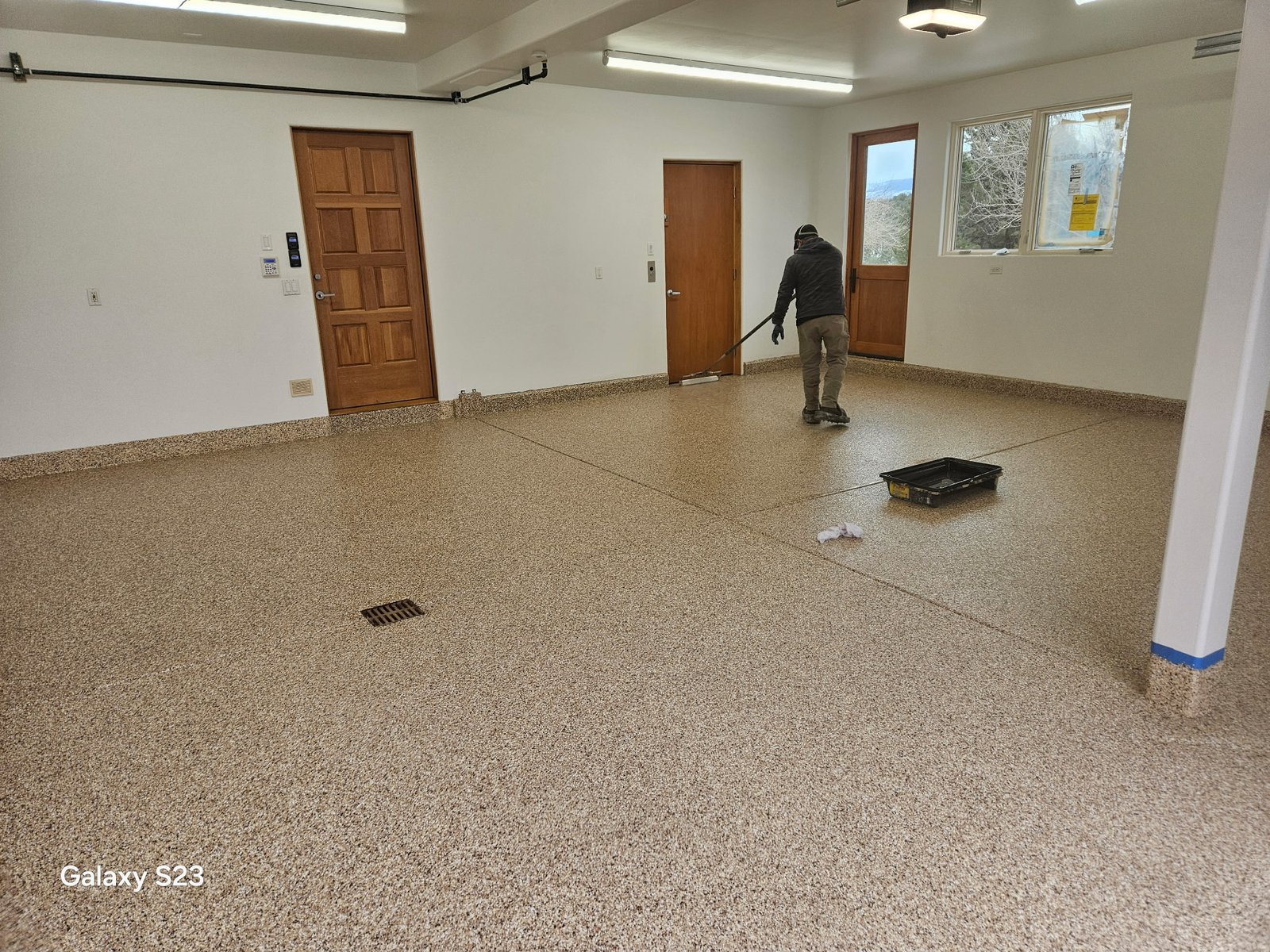
This is the question we hear most in winter, because nobody wants to park in the driveway during a snowstorm. Here is how a typical job goes.
-
Free walkthrough
We check the slab, any old coating, cracks, and moisture, and bring chip samples so you can see colors in your own garage.
-
Itemized quote
You get a clear price, broken out line by line, before anything goes on the calendar.
-
Grind and repair
We diamond grind the concrete and fill cracks and pits so the coating bonds to sound slab.
-
Build the floor
Primer, epoxy base coat, a full broadcast of chips, then a clear topcoat.
-
Cure
Foot traffic comes back well before vehicles do. We give you exact times for walking and parking before we leave.
Cure times depend on the products and the temperature in your garage, and cold can stretch them out. Knowing the exact times up front lets you plan where the cars go.
Want to know what your garage would need? We’ll tell you at a free walkthrough.
Book a Walkthrough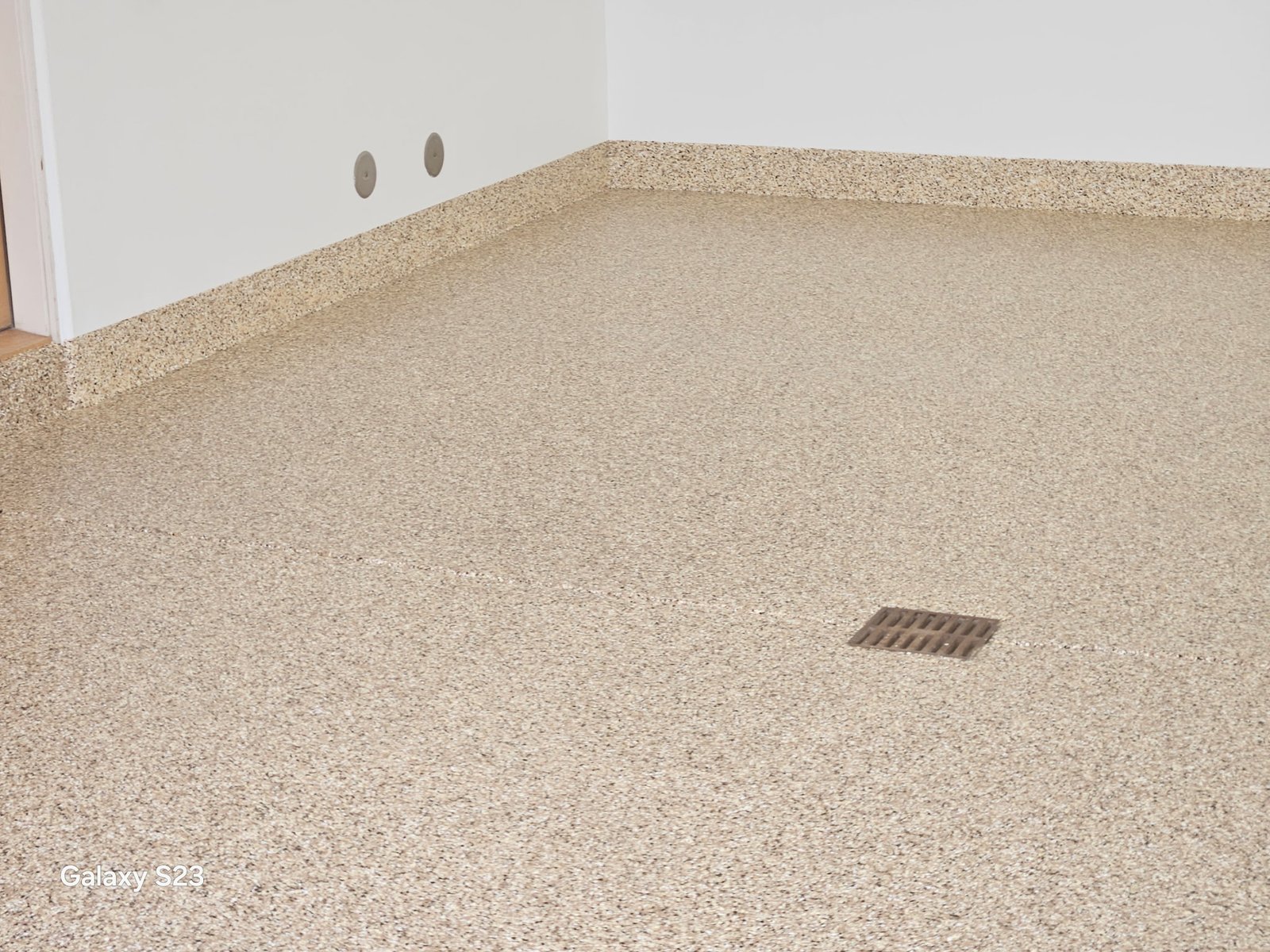
A few tips for a winter install
- Clear out the garage before we arrive, including anything stored along the walls.
- Plan where your vehicles will go until the floor is ready to park on.
- Ask us about heat and airflow for your garage during the cure.
- Have a spot inside for anything that can’t sit out in the cold, like paint, batteries, or fluids.
Chip or Quartz for Your Garage?
Both of our indoor systems start the same way: ground concrete, a primer coat, and an epoxy base. The difference is what gets broadcast into the base.
| Feature | Paint chip floor | Color quartz floor |
|---|---|---|
| What goes in | Colored vinyl chips | Colored quartz sand, broadcast twice |
| Look | Flecked, textured | Fine, speckled stone |
| Grip when wet | Good | High, with adjustable texture |
| Best for | Garages, shops, basements | Mudrooms, laundry, kitchens, commercial |
For most garages, a paint chip floor is the right call. It hides sand and gravel between cleanings and handles hot tires and snowmelt. If you are also doing a mudroom or ski room off the garage, a color quartz floor gives you extra grip where wet boots come in.
Frequently Asked Questions
Can you really install an epoxy garage floor in winter in Colorado?
Yes. Chip and quartz floors are indoor work, so our crew installs them all winter. The temperature of the space and the slab affects cure times, and we plan around that for every job.
My garage is not heated. Can it still be coated?
Often, yes. It depends on the space and the weather that week. We look at it during the free walkthrough and tell you what is realistic.
How long will I be out of my garage?
Foot traffic comes back well before vehicles. Cure times depend on the products and the temperature, so we give you exact times for walking and parking before we leave.
Should I wait until spring?
You can, but your floor takes the most damage from salt and snowmelt in winter. Coating it now stops that damage sooner, and winter schedules tend to be more flexible than spring.
Can you coat over my old garage floor coating?
Sometimes. If the old coating is peeling or poorly bonded, it has to come off first. We check the bond at the walkthrough and include any removal in the quote.
Do you do patios and pool decks in winter too?
No. Outdoor epoxy rock overlays need warm, steady weather and are installed from late spring through early fall. Winter is a good time to get a walkthrough on the books for next season, though.
Now booking winter garage floors
Stop fighting salt and snowmelt on bare concrete
Our crew comes to you, checks your slab, and gives you a real price. No guesses over the phone and no pressure.
- Free on-site walkthrough with chip samples in your garage
- Itemized quote before anything goes on the calendar
- Diamond-ground prep on every floor
- The people who quote your job are the people who do it
Serving Grand Junction, Glenwood Springs, Carbondale, Basalt, El Jebel, Snowmass, Aspen, Eagle, and Vail.